Jaryo
An adaptive design language
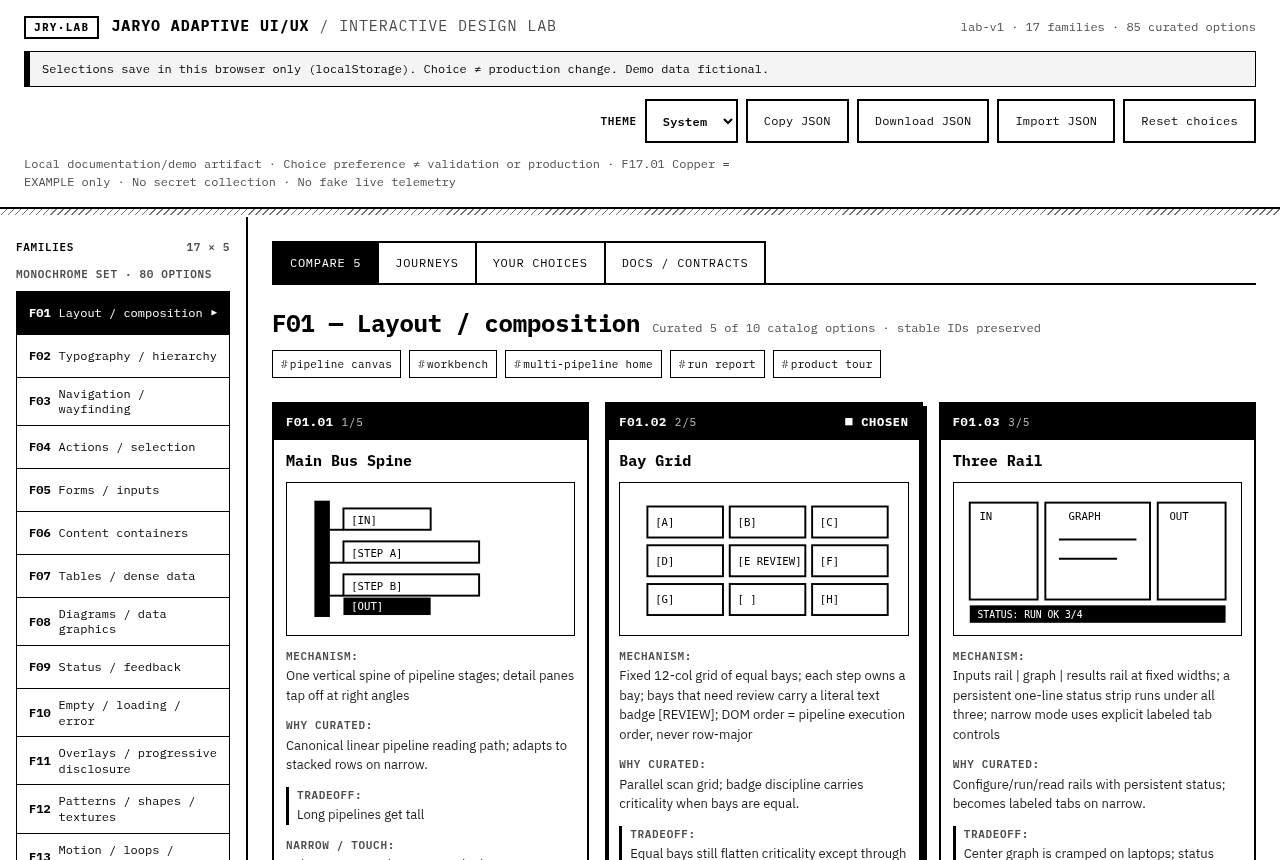
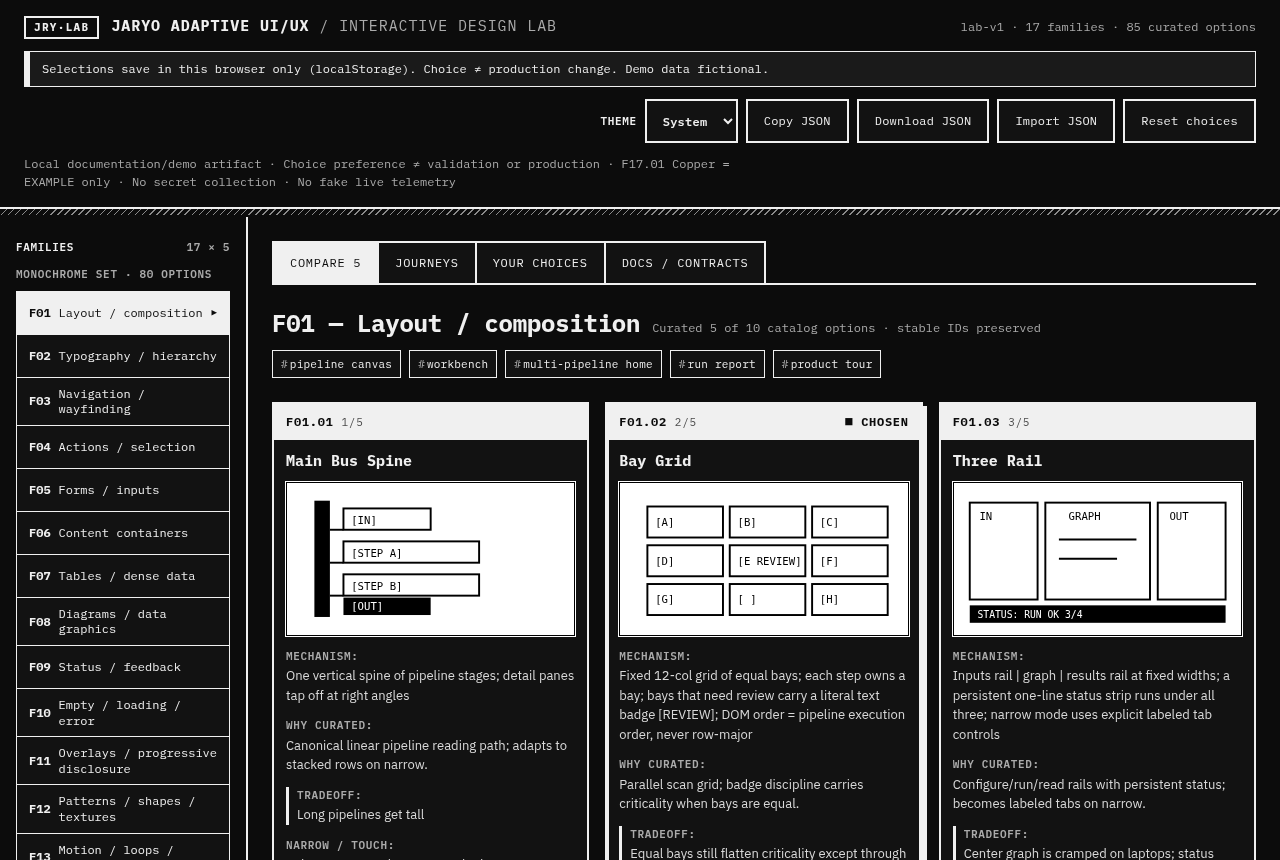
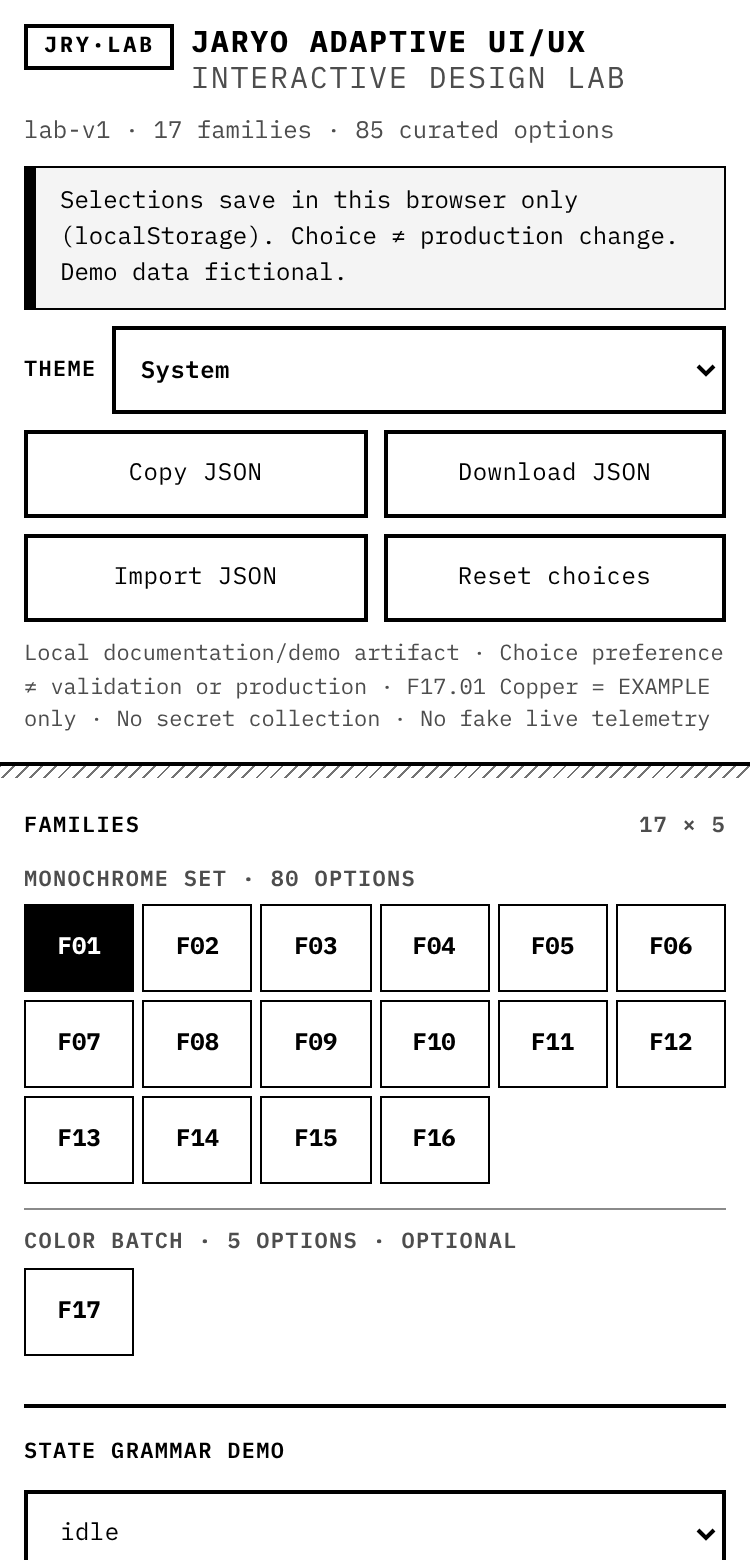
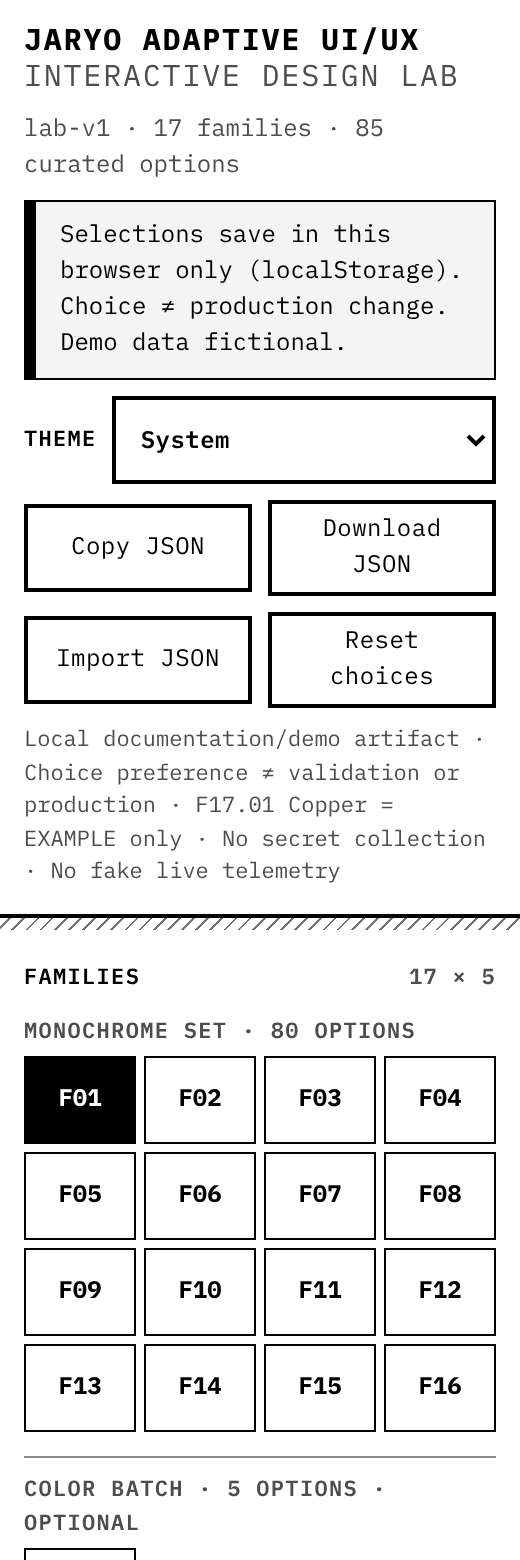
Adaptive black-and-white design language and interactive lab with 19 families · 85 curated + 12 optional (97 total), light and dark themes, layouts from about 260px to desktop, keyboard accessible. Work in progress; known gaps are listed on the page.
Interactive lab · GitHub Pagesv0.2.0
Black and white interface
options you can try.
Jaryo is a text-first design language for product UI. Lab catalog: 19 families · 85 curated + 12 optional (97 total). The families cover layout, type, controls and states. The optional studies are legacy studies and a Red interactive UI. Themes are light and dark. Layouts run from about 260px to desktop. Keyboard use is supported.
Text first. Two colors.
Editorial structure.
A shared interface language.
Jaryo keeps product screens readable without relying on color, icons or decoration. Controls are labeled in words. Surfaces use black and white. The same language is used in AGIW Suite’s interface and in the Surface Duo OS of Old Phone OS. Its type follows Louis Calata’s Typography 1 studies: a mono face for labels and IDs, a sans face for reading at a 1.5 line height, and spaced capitals for meta lines.
Text first
Buttons, tabs and options say what they do in plain words.
Two colors
Ink and paper only in the chrome. Optional color and red studies stay inside their own preview cards.
Keyboard
Option groups and tabs support arrow keys, Home, End and Space. Focus rings are visible for keyboard users.
Browse the options.
The lab is hosted on GitHub Pages from the Jaryo repository. It is documentation and exploration, not an installable product. Choose options, compare families, export a selection JSON, and switch theme.
louiscalata.github.io/jaryo (opens in a new tab) Source on GitHub (opens in a new tab)
What the lab does not cover yet.
- Multi-tab conflict handling is not implemented; two tabs can overwrite each other’s saved choices.
- Journey frames are reference sketches, not live composition.
- Screen-reader behavior on real VoiceOver, NVDA or TalkBack has not been verified here.
- The lab’s automated smoke checks run in Chromium, Firefox and WebKit (the engine behind Safari), plus a Chromium forced-colors check; Safari itself on a Mac or iPhone has not been checked.
- Choice preference in the lab is not a production change.
Related projects.
- AGIW Suite — monitor UI using the Jaryo shell.
- Old Phone OS — the Surface Duo OS uses Jaryo panes and text buttons.
- louiscalata/jaryo (opens in a new tab) — source repository.
Keep exploring.
All code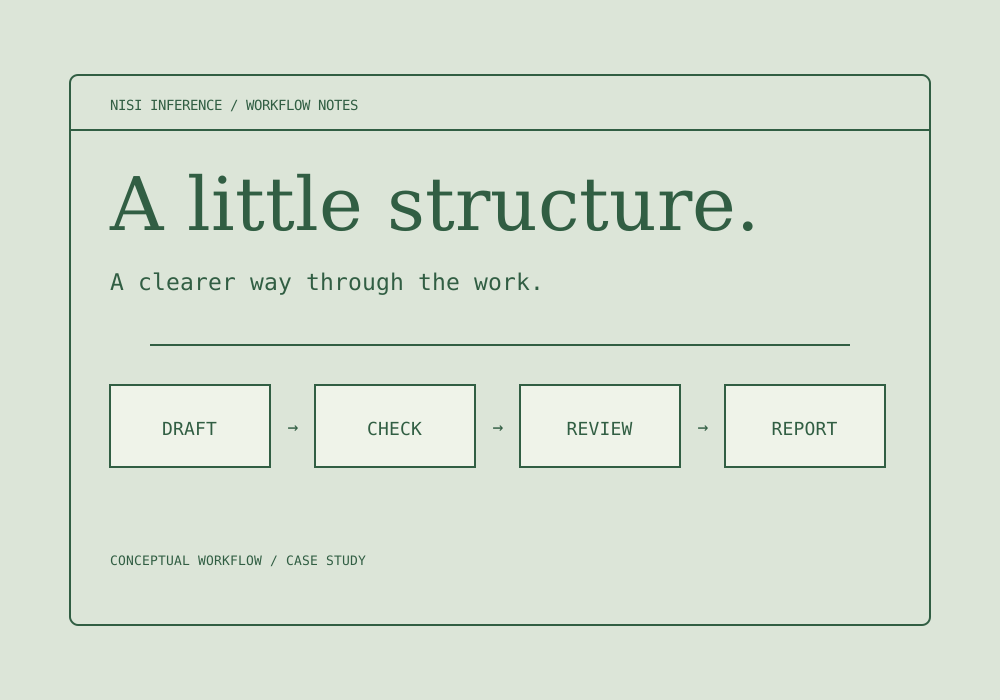
Nisi
CLI and library, v0.3.1. A bounded workflow for proposed changes, checks, tests, review and a recorded outcome, with optional Jev analysis for local models.
Work in progress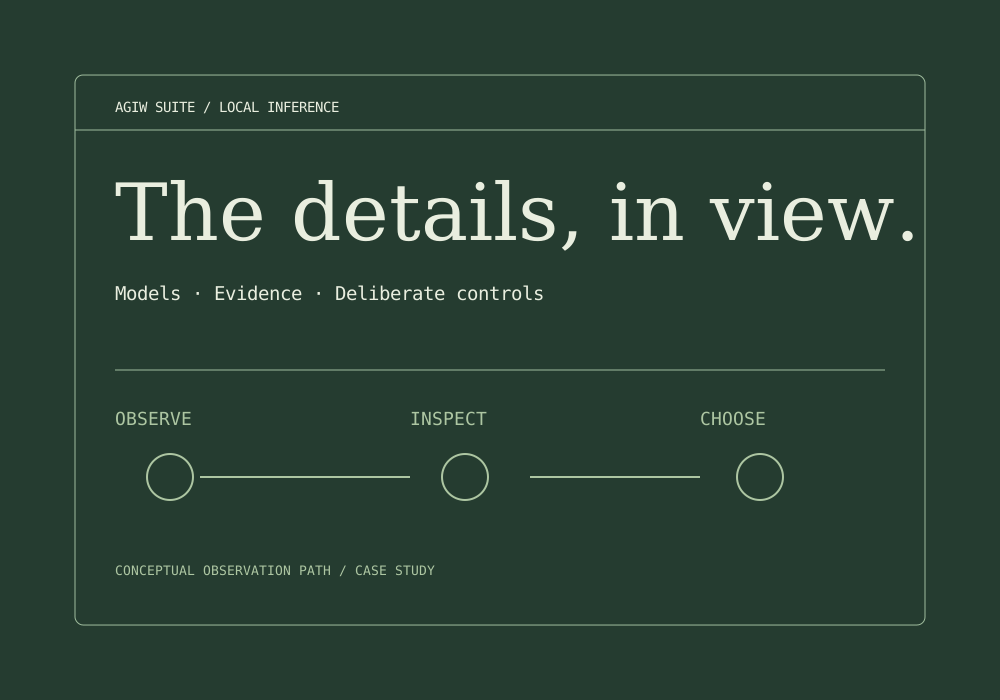
AGIW Suite
Mac monitor for local model observations, resource readings and deliberate controls, with a Jaryo interface. Signed download 1.0.0 (7); source release 1.1.0. Work in progress.
Work in progress