Caramel has more than one story
Sugar, dairy, heat, and the useful distinction between caramelisation and a caramel confection.
An editorial technique note, prepared for For The Love Of with AI assistance and checked against the sources below.
Caramel is a convenient word. It can suggest a colour, a flavour, a sauce, a decoration, or a chewy sweet. That convenience can hide the question a cook actually needs to ask: what is in the pan, and what is changing?
Start with the ingredients
The Exploratorium distinguishes caramelisation in heated sugar from the browning involved in a dairy caramel confection. Its account describes the breakdown and transformation of sugar during caramelisation, while sugars and proteins can participate in Maillard reactions in a mixture containing cream.
The two descriptions help explain why a shared brown colour does not imply a single process. A dairy confection and a sugar decoration have different ingredients and different goals.
Name the result you want
Before choosing a method, name the destination. A crisp decoration, a pourable sauce and a chewy sweet ask for different textures. Writing that destination down makes it easier to evaluate a method and to understand which parts of a recipe are doing the work.
The same care applies to tasting language. “Caramel” may be a useful first impression, but a more specific description can distinguish sweetness, roasted notes, bitterness, or the contribution of dairy. Those observations are worth keeping alongside the exact preparation being followed.
A place for precise notes
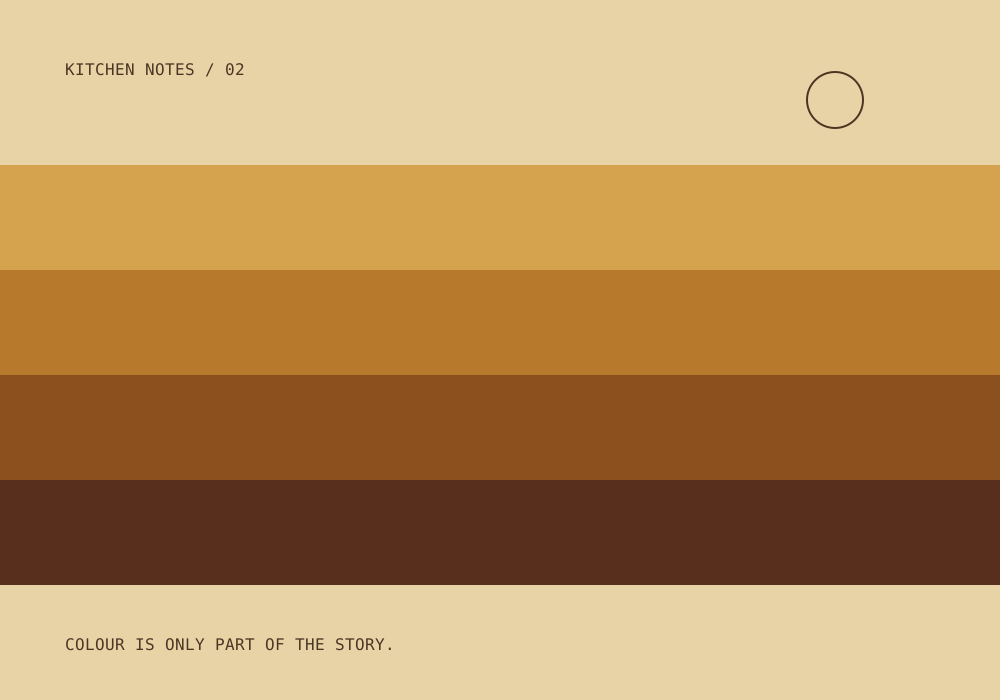
Colour studies can be useful reminders, but they cannot substitute for a tested method. The bands above are an illustration, not a temperature chart or a set of cooking endpoints.
When a recipe is ready to publish here, its ingredients, timing and steps will belong together on the page. This note supplies a distinction to carry into that work: begin with the actual mixture, describe the texture you want, and choose words that help another cook understand it.